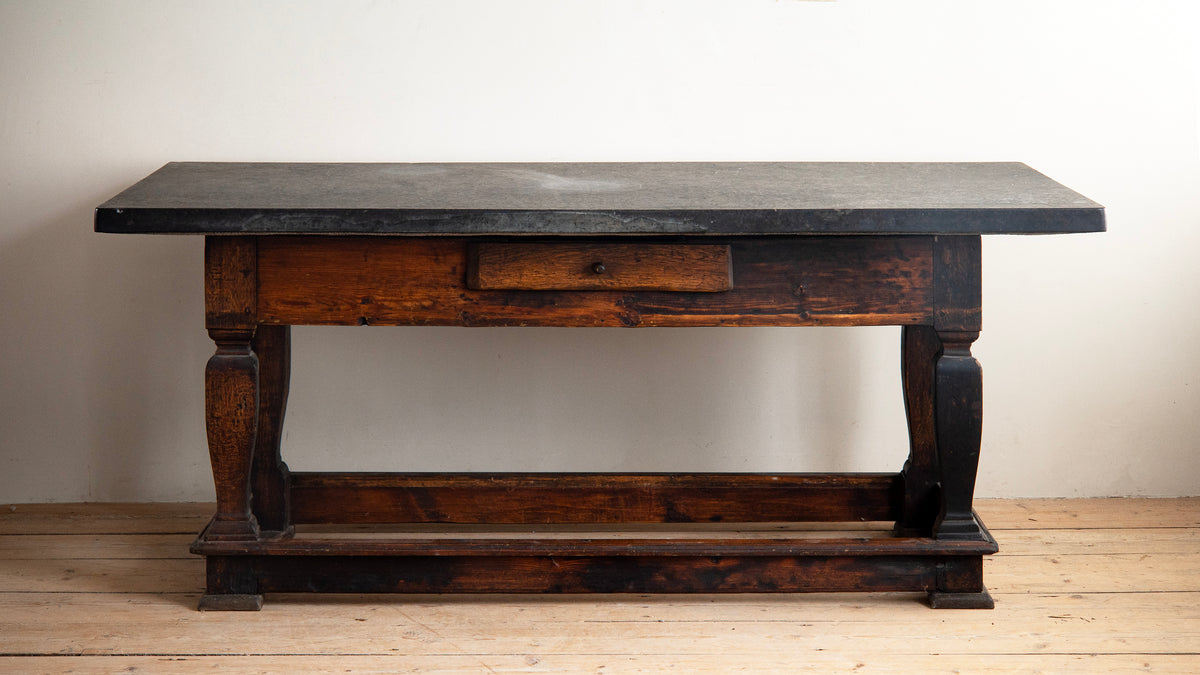
18th century Swedish Baroque stone top table constructed from solid pine wood with a heavy slab top of regional Swedish Komsta limestone. The wooden base features a single central drawer with a simple turned wooden pull, set into a deep apron. The frame is supported by sturdy profile-turned baluster legs joined by a full-perimeter lower box stretcher resting on block feet. The timber surface retains an aged, naturally darkened stain showing historic tool marks and grain texture, while the thick stone top exhibits a hand chiseled underside and profile along the perimeter and a naturally hone-worn grey-black surface.
Specifications:
Origin: Sweden
Period: 18th Century
Style: Baroque
Finish: Stained solid pine, natural Komsta limestone
Dimensions: H: 31.1" (79 cm) | W: 75.6" (192 cm) | D: 36.2" (92 cm)
Condition: Structurally sound with tight joinery throughout. The wooden base shows surface wear, minor indentations, and darkening consistent with age and use. The Komsta stone top remains intact with light surface patina, subtle tone variations, and edge wear typical for historical stone slab construction.
History: Originating primarily in southern Sweden during the seventeenth and eighteenth centuries, stone-topped tables like this example represent a distinctive convergence of regional geology, specialized craftsmanship, and rural Scandinavian tradition. Quarried locally in Scania from dense grey-black limestone, such as Komstad stone, these massive slabs required purpose-built cabinetry engineered to bear substantial weight. Cabinetmakers designed heavy pine and oak frames featuring thick baluster legs, deep aprons, and perimeter box stretchers to ensure absolute structural stability over generations of use.
In the historical Swedish household, the stone-topped table served as the central workstation in large estate kitchens, bakeries, and farmsteads. The cool, non-porous nature of the honed limestone made it an ideal surface for food preparation, particularly for rolling dough, preparing dairy products, and processing meats. During mealtimes, these resilient tables transitioned into the main dining surface for family and estate workers alike. Frequently commissioned as heirloom wedding gifts or dowry pieces, these tables were built to endure heavy daily utility, leaving behind a rich, naturally aged patina that reflects centuries of functional domestic history.